Bonding Activities for Moms and Daughters at Home
When she is at school, life has a rhythm. She leaves, you work, she comes back, homework happens, dinner happens, bedtime happens. You know exactly where everything fits. The challenge is the holidays. When they are home with you twenty-four hours a day and have no idea what to do with themselves, and honestly, neither do you.
Our moms figured it out. Our grandmothers figured it out, whether they worked outside the home or inside it. They made things work, or they let us figure things out on our own. We moms, on the other hand, carry a constant guilt about not spending enough time, not doing enough, not being enough. And that guilt shows up in different ways: excessive toys, constant praise, elaborate activities we spend three hours setting up for a child who loses interest in eight minutes.
I know you can relate to that. The prep time alone is exhausting.
What we actually need is something sustainable. Something that does not drain your energy, your time, or your bank account. Something that can quietly become part of your day without requiring a whole production. Set aside the pressure to be constantly enriching and stimulating. These fifteen activities are simple, low-effort, and most of them you are probably already halfway doing. You just have not thought of them as bonding yet.
If you have read my post on how quiet moments became my intentional parenting practice, you already know where this list comes from. Real life. Real tiredness. Real love.
1. The Daily Story Habit
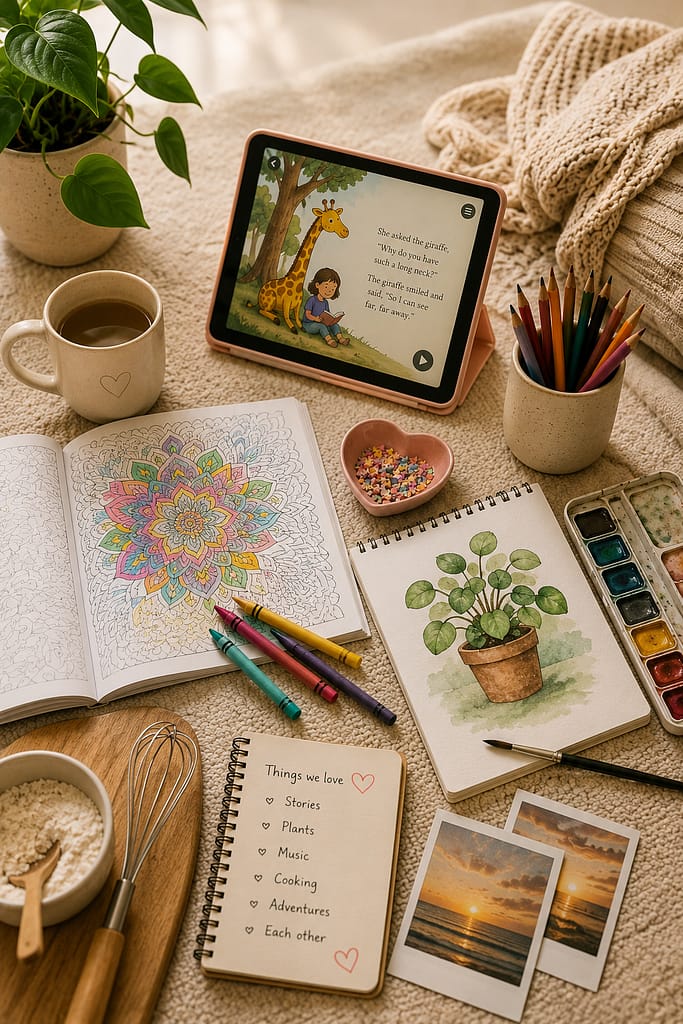
This one is already a fixed part of our evenings. The rule is simple: five minutes of reading, five minutes of questions, five minutes of discussion. On school days, she is sometimes too tired, so she just hugs me and falls asleep. But during holidays, she has energy, and she is curious, so this is the perfect time to make it a daily habit.
We use a mix of books and a story app that tells real-life stories in short, self-contained pieces. Not fairy tales. Stories about real people and real things, Cristiano Ronaldo, Neil Armstrong, and how plastic travels the world. The discussion is my favourite part because I get to know what is going on in her head. She forms opinions, shares them, and I get to gently add mine. It feels productive without feeling like a lesson.
2. Colouring Side by Side
The classic, and for good reason. But this is not sitting together and colouring the same picture. This is each of you with your own picture, in your own world, colouring in companionable silence.
We talk beforehand. We plan our colours, we decide our approach. Then we start, and the room goes quiet in the best way. She is fully focused, which is rare and wonderful. I am fully in my head, which is something I genuinely need. Sometimes we do one picture, sometimes two. We do not draw because then my drawing ends up better than hers, and that becomes a whole situation. Colouring keeps us equal, keeps us calm, and keeps us in the same room without either of us needing to perform.
3. Cooking One Thing Together
Not a full meal. Just one thing, one component, one task. The key is giving her a role and rotating it.
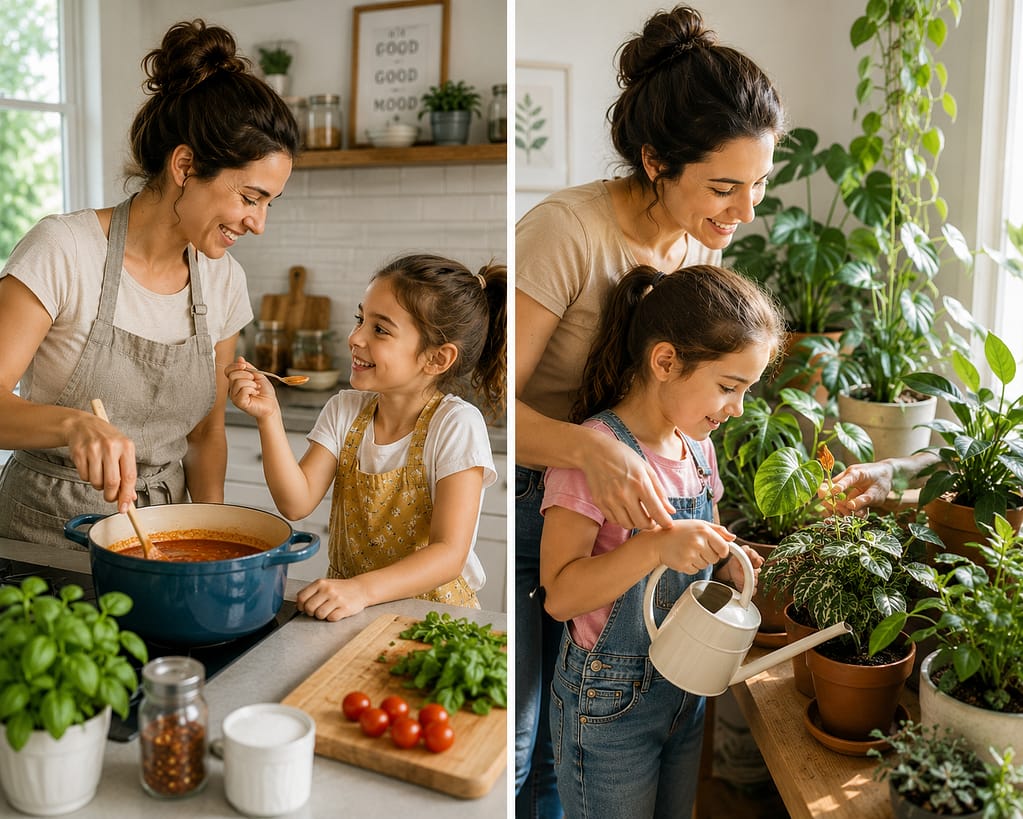
One day, she is on the tasting committee. She sits nearby, tastes as I go, and gives her verdict on the flavour. Another day, she is on the ingredient hand-off committee, passing me the next thing I need. Another day, she is on the stirring committeeor thee pouring committee. Some days she is purely on entertainment duty, singing or dancing while I cook, which honestly makes the whole process better for both of us.
Cooking together does not always have to mean hands-on cooking. A child can be present, engaged, and contributing without touching the stove. She learns about food, about taste, about how things are made, and I get to cook without the guilt of ignoring her.
4. Watering the Plants
I have a lot of plants, and I genuinely love them. When I water them, I always bring her along. Not to water all of them by herself and run off, but to spend a moment with each one.
I ask her to look at the leaves. How are they different from each other? How some have texture, and some are smooth, where the new growth is appearing. She gets very attached to baby leaves. The moment she spots a tiny new leaf, she is hooked. She checks on it every day to see how much it has grown. She takes note of it like she is personally responsible for it, which in a way she is. Caring for plants teaches her patience and observation in a way that no worksheet ever could.
5. Watching a Documentary Together
This usually starts with a question that comes out of the story habit. She asks something we cannot fully answer from the book, and instead of just Googling it and moving on, I tell her we are going to look more into this. We find a short documentary or a YouTube video that goes deeper.
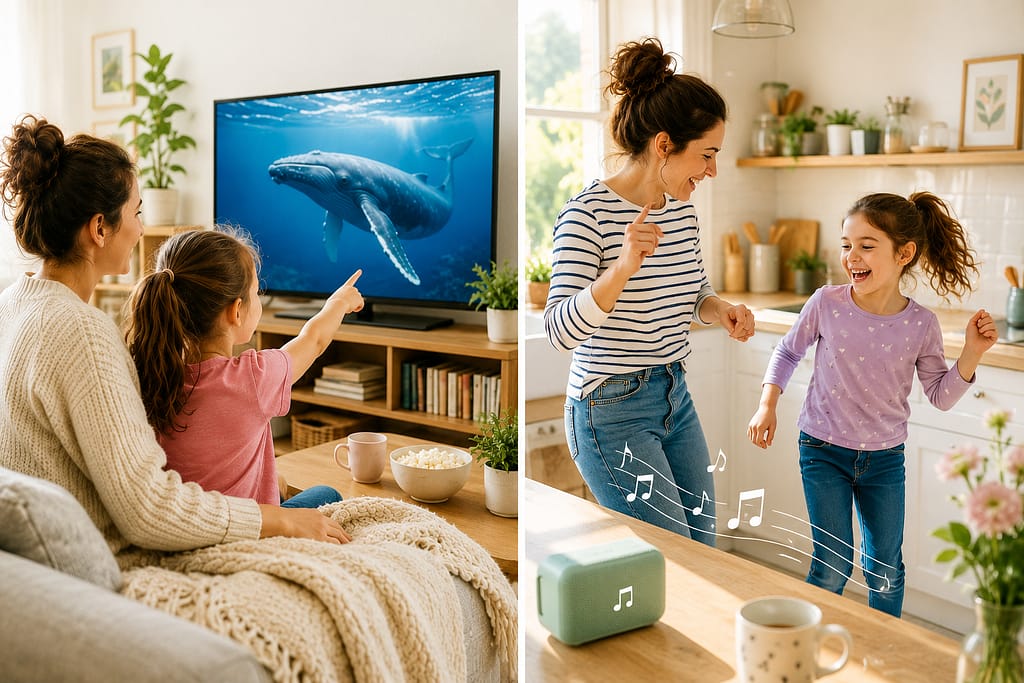
The whale documentary is a recent one. She had so many questions after a story we read, and watching the footage of actual whales in the ocean answered every one of them in a way no explanation from me could. The Apollo 11 documentary is the one I will always remember, watching her face when the rocket lifted off and she saw the actual moon from space. We became children alongside her that evening. Capitalise on whatever topic she is currently obsessed with and extend it. That curiosity is gold.
6. Listening to Music Together
Not children’s songs. Real music, age-appropriate but real, was introduced slowly, one song at a time.
I play something I love, and we listen to it together. Sometimes I tell her a little about the artist. Sometimes she has questions. Sometimes she just dances immediately,y and we end up in the kitchen having an impromptu dance session that neither of us planned. Music is one of those things that bypasses explanation and just creates a mood. It is also how I am quietly building her taste and her reference points for what good music sounds like. She will thank me for this in about ten years.
7. The Emotion Check-In
This one looks like a simple conversation, but it is probably the most important activity on this list.
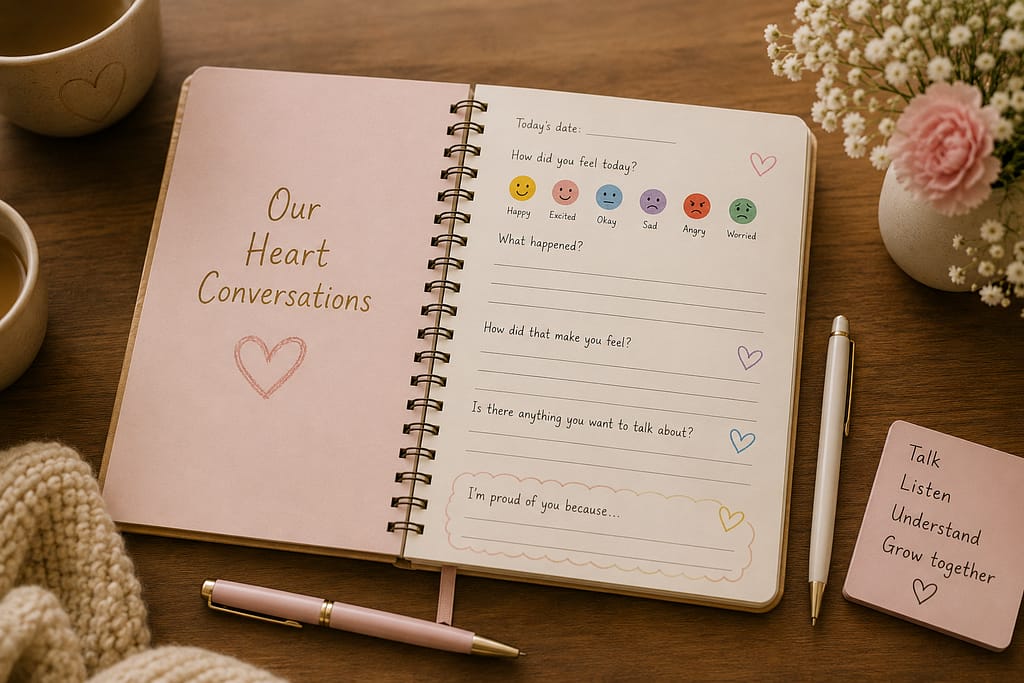
When she comes home, or during a quiet moment together, I do not just ask how her day was. I asked how she felt. What happened, and how did it land for her? She is at the age now, her seventh year, where she is starting to name her experiences; she can say, ” My friend did this, and I felt angry, and that is a big developmental shift. What I have learned is that she often has the feeling but not the label for it. When I give her the word, something in her settles. She feels understood and normal. This is not a gentle parenting philosophy. It is just practical. A child who can name what she feels is easier to support and easier to send back out into a world that will not always be kind.
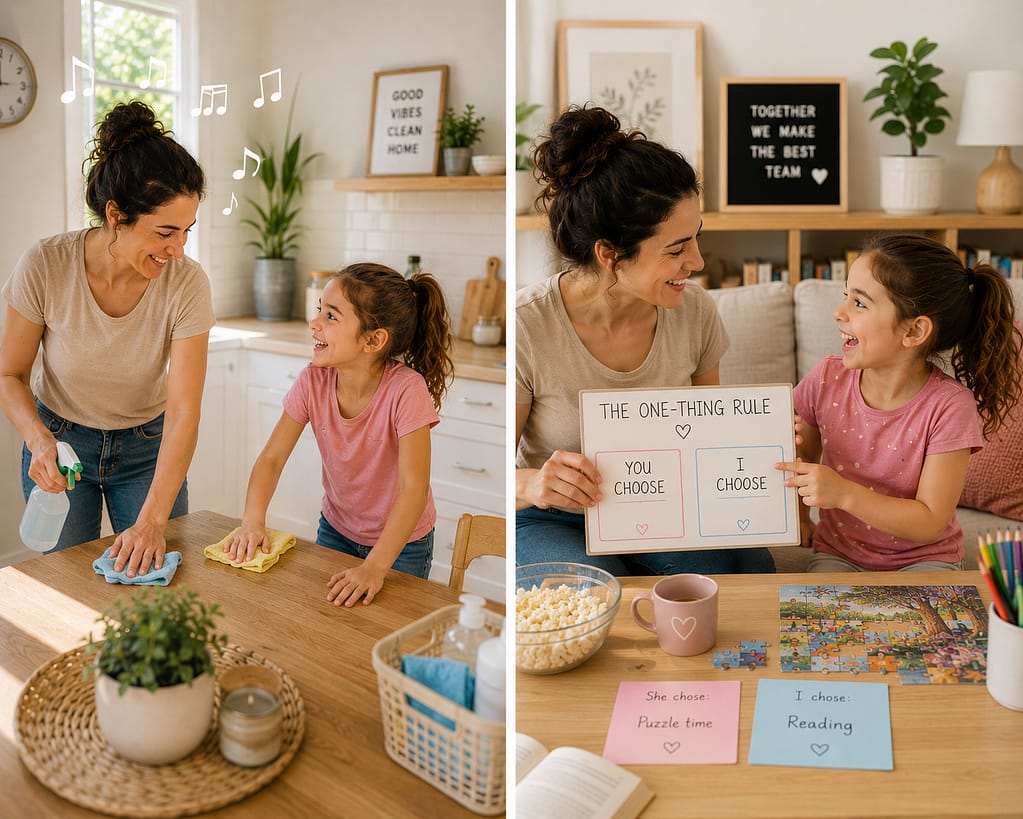
8. Cleaning Together
This sounds like a chore, and it is, which is exactly the point. Life is made of ordinary tasks, and she is not too young to be part of them.
She has her jobs: tidying her own things, helping fold smaller items, wiping surfaces she can reach. We put on music, and we get it done together. What I have noticed is that doing something routine side by side is its own form of closeness. There is no pressure to connect, no activity to manage. You are just in the same space, doing the same work, and something easy and real happens between you.
9. The One-Thing Rule
This is the principle that changed how we spend time together most. One thing she chooses, one thing I choose. That is the deal.
When I was trying to entertain her with only her interests, I was exhausted and often unsuccessful. When she was doing only what I suggested, she was bored quickly. The compromise respects both of us. She picks something she loves. I pick something I genuinely enjoy. We take turns,s and we both show up fully because neither of us is tolerating anything. It sounds simple. It works because it is honest.
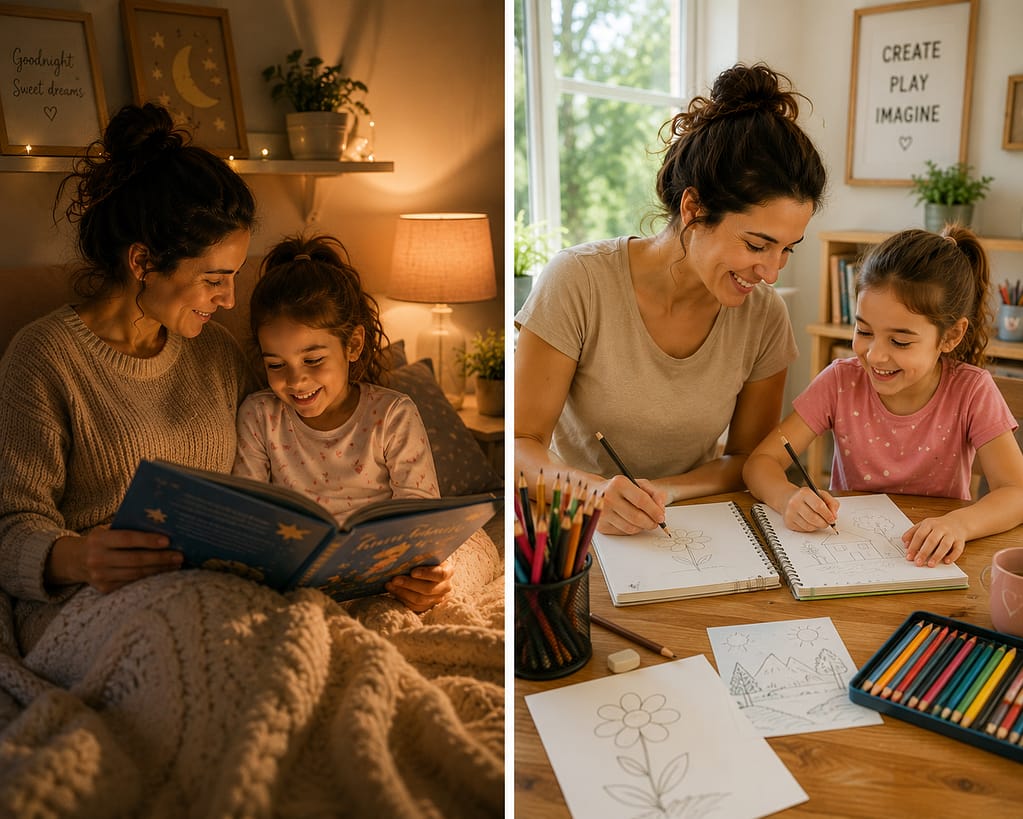
10. Reading to Her
Even though she can read by herself now, there is something different about my reading to her. The closeness of it. The fact that she does not have to do any work, she just receives the story. She asks more questions this way and goes deeper into the characters.
We do this mostly at night, after everything else is done. It is the quietest part of our day and somehow the part she remembers most.
11. Sketching and Drawing Together
Neither of us is particularly skilled at this, and that is the whole point. We sketch without pressure, without comparison, without a goal. Sometimes we draw the same object and compare. Sometimes we draw completely different things and show each other at the end.
What matters is that we are both creating something, both in a slightly meditative state, both off our screens. Art does not require talent to be meaningful. It just requires showing up with a pencil.
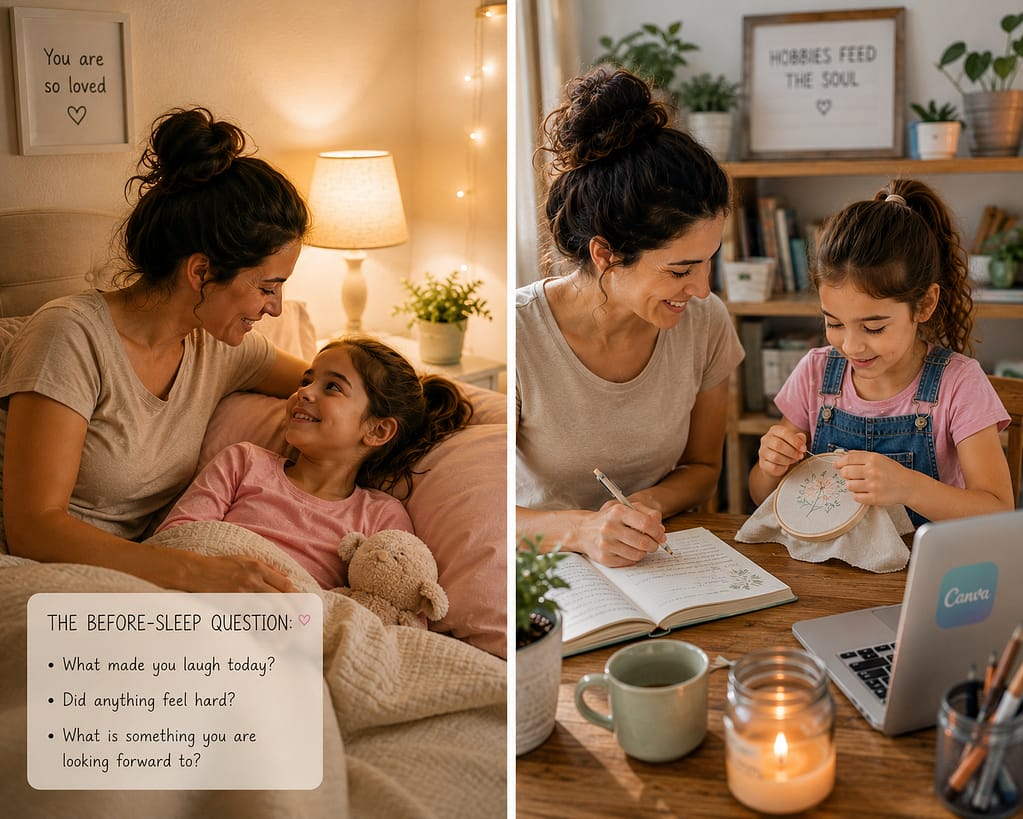
12. The Before-Sleep Question
One question every night, right before she closes her eyes. Not about school performance or homework. About her inner world.
What made you laugh today? Did anything feel hard? What is something you are looking forward to? These questions take thirty seconds,s and they have opened some of the most meaningful conversations we have had. At this age,ge she is forming her understanding of who she is and what matters to her. These questions help her practise that. They also tell me things about her day that she would never think to bring up unprompted.
13. Introducing Her to Your Hobbies
Not forcing her to sit through something she hates. Including her in what you are already doing and seeing what sticks.
I journal, I work on Canva, I do light gardening, and I occasionally take up embroidery. She watches, she asks questions, she tries things. Some of it she drops immediately. Some of it surprises me. The point is not to make her love what I love. It is to show her that adults have inner lives, interests that are just theirs, and that there is dignity in a quiet hobby. She is learning that about herself, too.
14. Looking Things Up Together
When I do not know the answer to her question, which happens often and more than I expected at this age, I do not just Google it and relay the information. I sit with him,r and we look it up together.
She sees the process: how you search, how you evaluate what you find, how you ask a better question when the first answer is not enough. She is building a research instinct without knowing it. And I get to be curious alongside her instead of performing as the all-knowing parent, which is both impossible and exhausting.
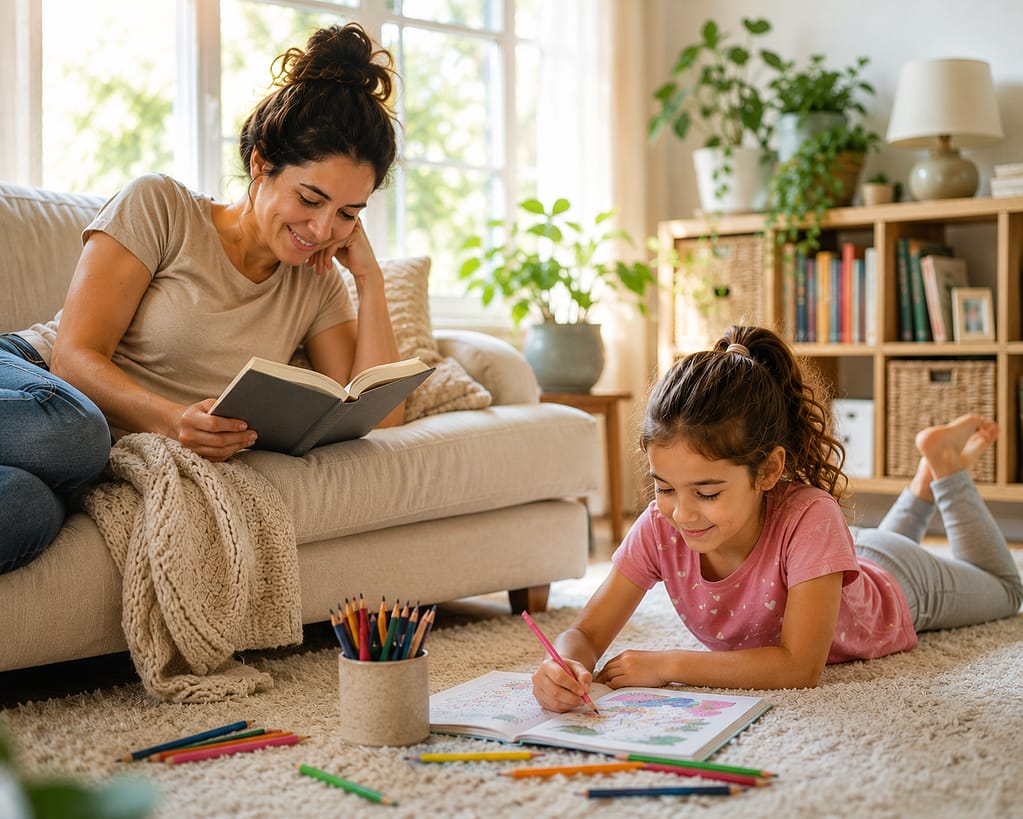
15. Doing Nothing Together
The most underrated thing on this list and possibly the most important.
No activity, no phone, no agenda. Just being in the same room. She colours, I read. She builds something, and I journal. We are not talking, not interacting, just present in the same space. There is a kind of closeness that only comes from this, from not needing to fill the silence, from being comfortable enough with each other to just exist together.
She will not remember the specific activities we did. She will remember the feeling of being beside me without needing to earn my attention. That is the whole thing, really.
The Point of All of This
None of these requires you to be a craft-table, activities-board, sensory-bin mom. They require you to be present in the ordinary moments you were already living and to stop walking past them.
The activities that last are the ones that cost nothing, take little preparation, and feel natural to both of you. Start with one. See if it sticks. Add another when you are ready.
This is what I mean when I talk about building an intentional life. It is not made of grand gestures or perfectly planned weekends. It is made of these fifteen-minute moments, repeated across years, that quietly build a relationship your daughter will carry for the rest of her life.


You May Also Like

10 things to write in a mother-daughter journal this week

A Mother-Daughter Journal