Kitchen Organisation Tips That Work in Real Life
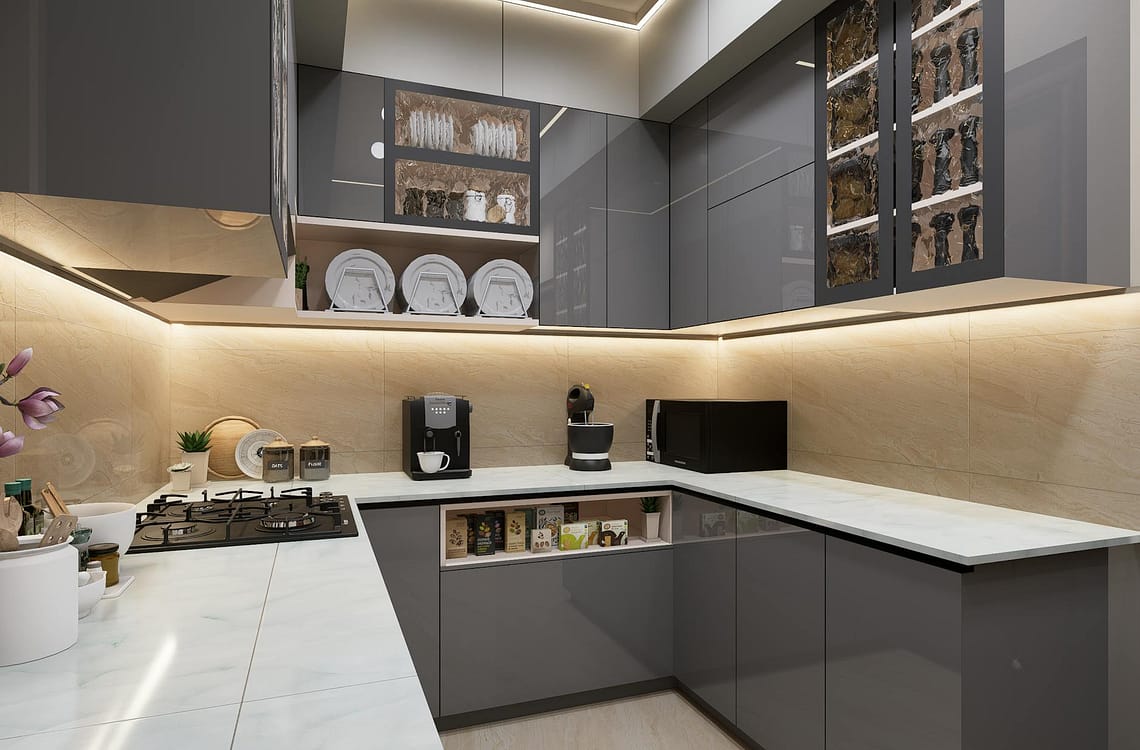
I love watching kitchen organisation videos. The satisfying ones. Everything in identical glass jars, every label perfectly written, the pantry looking like an interior design shoot. I watch them, and I genuinely want that for my kitchen.
And then I go and cook an actual meal.
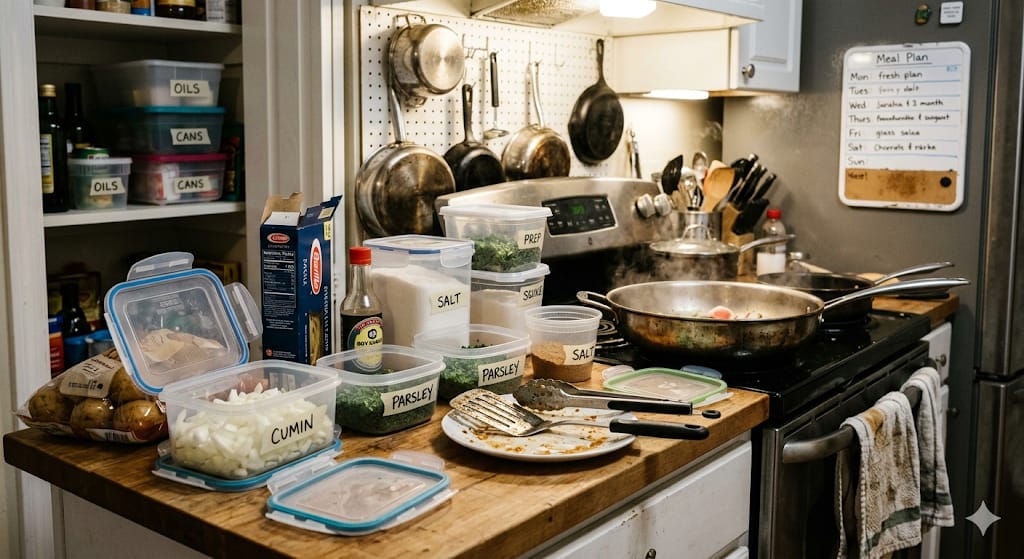
Lids everywhere. Ingredients pulled out and never put back. Counter cluttered with things I gathered before I started. Because that is how I cook all ingredients out first, chaos during, cleanup after. That is how most people actually use their kitchens.
These kitchen organisation tips are built around how you actually cook, not how Instagram says you should. Systems that hold up on a busy Tuesday evening when you are tired and just want dinner done. No overhaul. No shopping list. Just an honest look at how your kitchen actually works.
The Real Problem With Mo.st Kitchen Organisation Tips
It Is Designed to Be Photographed, Not Used
Most kitchen organisation content is aspirational. The kitchens you see on Pinterest and Instagram are either staged for a shoot or maintained by people with significant help. If you are the person who runs your kitchen, whether alone or with a partner or family, you need it to be more intentional than aesthetic.
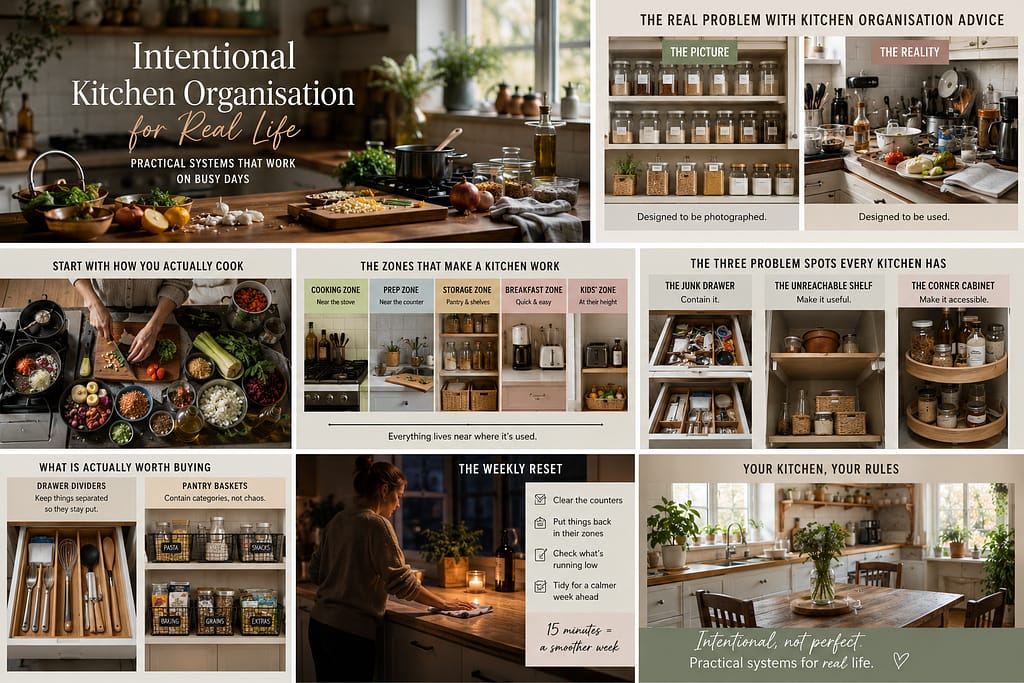
Matching glass jars are beautiful. They are also expensive to replace when one breaks, time-consuming to maintain because you need to track expiry dates and relabel when you change the contents, and genuinely impractical in a kitchen used three or four times a day.
The real kitchens I have been in and cooked in look like this: a random assortment of containers, a drawer where things go to die, a shelf nobody can reach, and mismatched Tupperware lids that somehow never match their containers. That is not a failure of organisation. That is a kitchen that is actually used.
Start With How You Actually Cook
Organise Around Your Habits, Not a Template
Before you buy a single basket or bin, answer this question honestly: What do you cook most often? What do you reach for every single day? What do you use once a month that somehow always ends up at the front?
The things you use daily should be at eye level, within arm’s reach, with zero effort required. The things you use occasionally go higher up or further back. This sounds obvious. Most kitchens are set up the opposite way because things landed where there was space when you moved in, and nobody questioned it since.
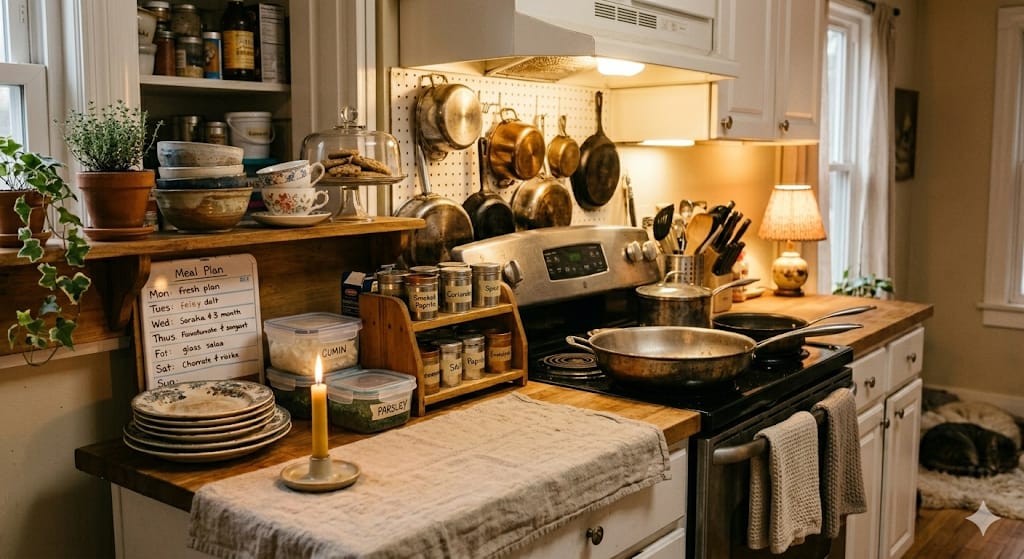
Spices are the clearest example. Your most-used spices do not belong in an alphabetical spice rack. They belong in a small cluster right next to the stove where you actually cook. Yes, the alphabetical rack looks beautiful. Some people build enough muscle memory that their hand just goes to the right place automatically. But if you are sharing your kitchen with anyone, and especially if your partner cannot find something even when it is directly in front of them, you need things to be simple and logical, not aesthetic.
Your kitchen should be organised around your cooking habits and your family’s. When you narrow down what you actually reach for, you can group those things together in similar-looking containers, aesthetically if you like, but practically first.
The Zones That Make a Kitchen Work
Everything Lives Near Where It Is Used
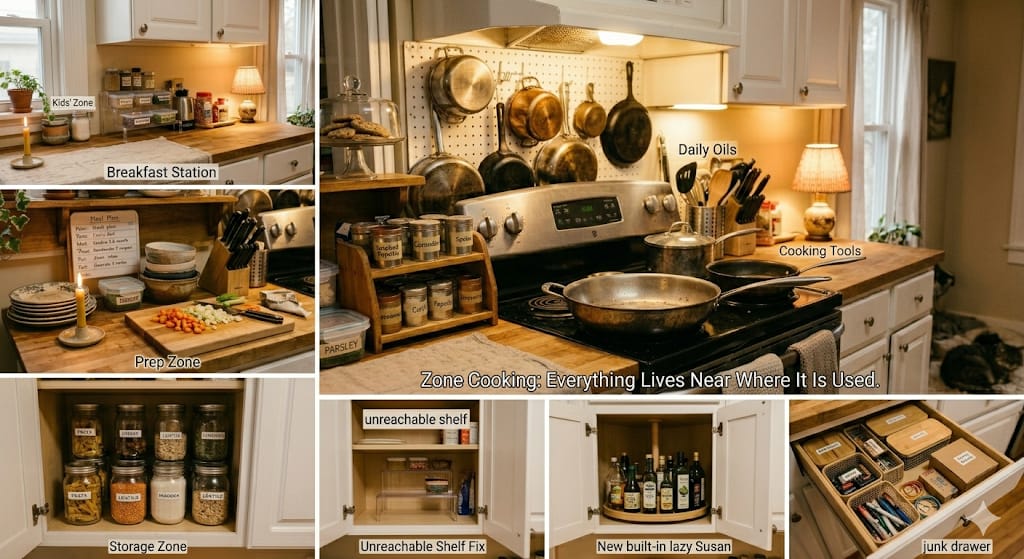
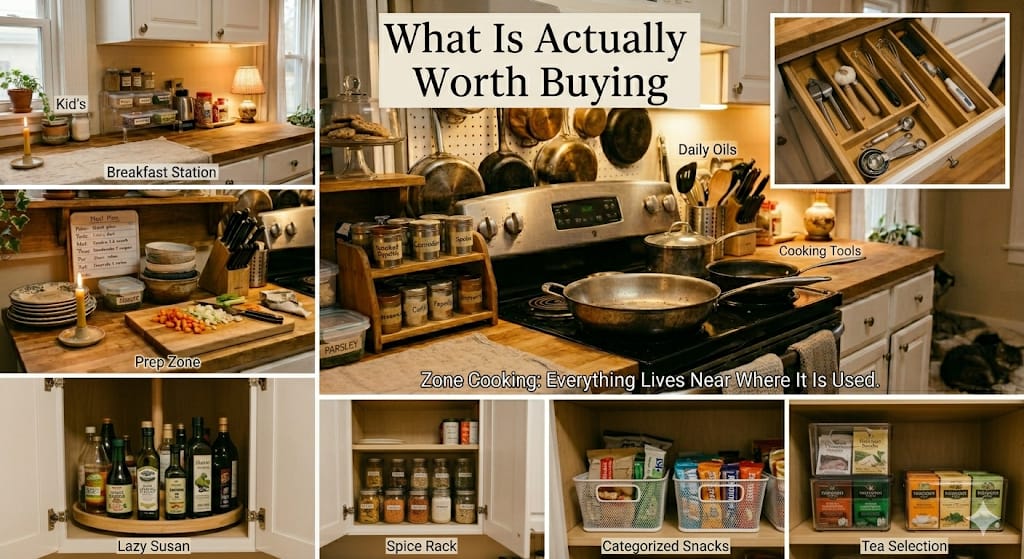
Zone cooking is the most effective kitchen organisation principle, and it costs nothing. The idea is simple: everything lives near where it is used.
- Cooking zone (near the stove): oils, daily spices, spatulas, cooking tools, condiments.
- Prep zone (near the counter or chopping board): knives, chopping boards, mixing bowls, anything you use to prepare food before it cooks.
- Storage zone (pantry or shelves): dry goods, backup supplies, things that last, things you do not reach for while actively cooking.
- Breakfast zone (if relevant): if you make the same breakfast most mornings, everything for it lives in one spot, so you are not opening four cabinets at 8am.
- Kids’ zone (if relevant): her snacks, her water bottle, anything she can get herself at her own height, so she is not asking you every time she wants something. This is the most underrated zone in a family kitchen.
If you share your kitchen with a partner, parents, or anyone else, the zones have to be a conversation. Everyone’s cooking style and organisational instinct are different. A system that works for one person and confuses everyone else is not a system; it is just organised chaos with better labels.
The Three Problem Spots Every Kitchen Has
And How to Actually Fix Them
The junk drawer. Every home has one. Batteries, rubber bands, a pen that may or may not work, something you have not identified in years. The fix is not to eliminate it. It is to contain it. One small box or divider inside the drawer. Everything chaotic lives there and only there. Contained chaos is manageable chaos.
The unreachable shelf. The one above eye level that collects things you meant to use but forgot. Fancy appliances. Gifts from people who might visit. Serve ware for the dinner parties that keep not happening. Do a quarterly clear-out. Anything not touched in six months gets moved to proper storage, donated, or thrown away. That shelf is valuable real estate, and it should earn its place.
The corner cabinet. The black hole of all kitchens. Things that go into the extreme corner rarely see daylight again. The single most effective fix is a lazy Susan, a simple turntable that lets you spin and see everything. If the shelf is deep, a step shelf inside, like a mini staircase organiser, puts things at different heights so you can actually see what is there. Some of these are easy DIY projects if you do not want to buy anything new.
What Is Actually Worth Buying
Three Things. That Is It.
You do not need a full matching set of anything. But three things make a meaningful difference if you do not already have them.
- Drawer dividers. The single biggest upgrade for a messy kitchen drawer. One divider changes the entire feel of a drawer that previously was a place where things went to disappear.
- Stackable pantry bins or baskets. Wire, grass, plastic, it does not matter. Group loose items, snack packets, sauce sachets, and tea bags into one basket per category. You stop losing things behind other things, and you can actually see what you have.
- A lazy Susan or step shelf. For deep shelves, corner cabinets, or anywhere you are constantly moving things to reach what is behind them.
Everything else is optional. The rest is aesthetic, and there is nothing wrong with that once the practical foundation is in place. Add a few props, make it look like one of those Pinterest kitchens if you want. But function first.
The Weekly Reset That Keeps It All Working
Organisation Is Not a One-Time Event
The biggest reason organised kitchens fall apart is not the original setup. It is the lack of consistent maintenance. A weekly kitchen reset takes ten minutes when your system is already in place. Here is what goes into it:
Wipe down the counter. Clear everything off it, wipe, and put back only what belongs there. Check the fridge for anything that needs to be used before the end of the week. Restock anything that ran out. Put back anything that migrated to the wrong spot during the week. This is not cleaning. Cleaning is separate. This is a systems check, a quick scan to make sure everything is still where it should be before the next week begins.
I close up my kitchen on Fridays. Weekends are for food from outside. So for me, the reset always happens Friday evening. Find whatever rhythm works for your week, Sunday evening before the week starts, Monday morning before work, it does not matter when. What matters is that it happens consistently.
Your Kitchen, Your Rules.
The whole point of this post is YOU DO YOU.
Your kitchen does not need to follow anyone else’s template. The goal is calm mornings, easier dinners, and not hunting for the cumin every single time. One zone at a time. One corner at a time. When your physical space runs with less friction, your whole day runs with less friction. That is what makes it an intentional kitchen, not a pretty one.
And once the system is in place, you can absolutely add a few props and make it look like the Pinterest kitchen you have always wanted. Function earns the aesthetic. This is exactly what I mean when I talk about building an intentional life. Intention is not saved for big decisions. It lives in the most ordinary corners of your home, including the corner cabinet that has not been opened since 2023.
If you enjoyed this, you might also like How to Make Your Home Feel Like Summer Without Buying Anything New, the same practical, low-effort approach applied to your whole space for the season.


You May Also Like

Budget-Friendly Diwali Home Decor Ideas That Look Luxe
Low-Maintenance Indoor Plants That Thrive With Minimal Effort