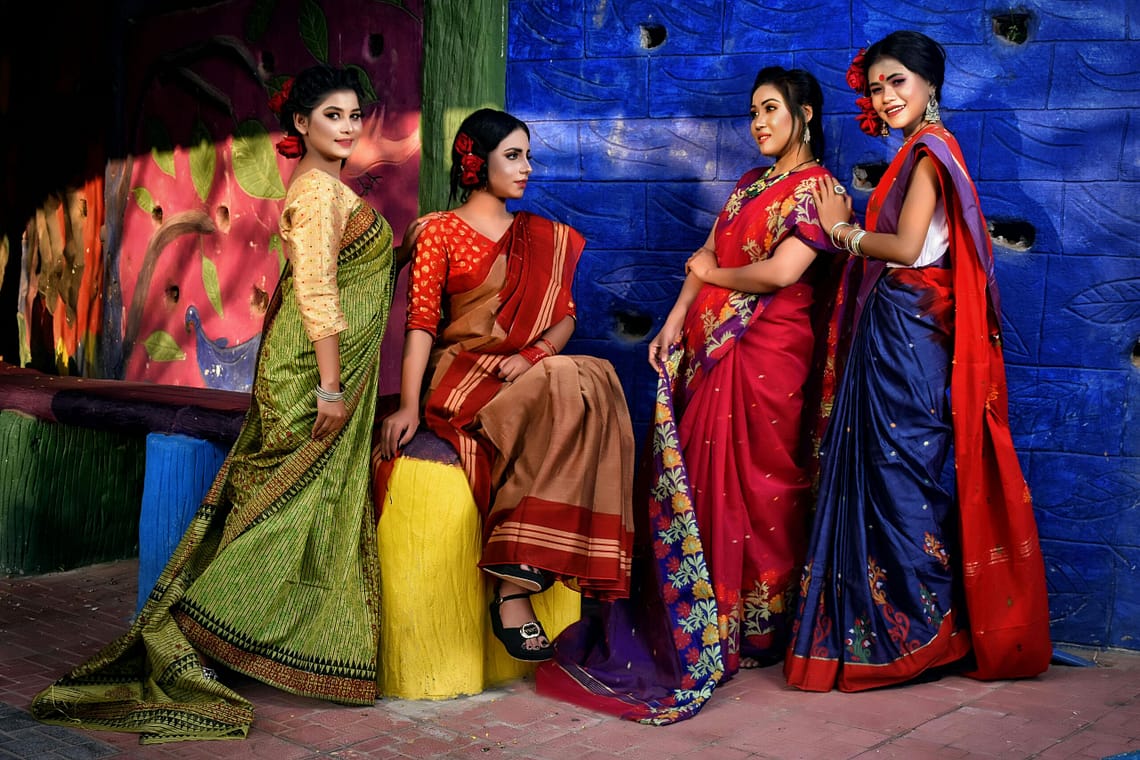
Kalamkari Sarees and blouses
To all the kalamkari sarees and blouses enthusiasts out there…
Kalamkari Sarees and Blouses: Timeless Elegance and Styling Tips for the Modern Wardrobe
In the ephemeral world of fast fashion, where trends emerge and vanish with alarming velocity, certain art forms stand as monuments to sustainable craftsmanship and cultural heritage. Kalamkari, an ancient textile tradition that has adorned Indian women for millennia, represents not merely a fashion choice but a profound cultural statement that transcends seasonal trends. This distinctive art form offers contemporary fashion enthusiasts an opportunity to embrace sustainability while celebrating artistic excellence that has withstood the test of time.
The Rich Cultural Tapestry Behind Kalamkari
The etymology of Kalamkari reveals its essence derived from Persian words ‘kalam’ (pen) and ‘kari’ (craftsmanship), signifying the meticulous pen-and-ink artistry that defines this tradition. Originating over three millennia ago in Andhra Pradesh, this textile art initially served religious and narrative purposes, with temple hangings depicting mythological epics guiding spiritual understanding among diverse populations. What began as devotional art gradually evolved into wearable storytelling, with artisans adapting ancient techniques to create garments of remarkable beauty and cultural significance.
Historical evidence suggests that Kalamkari flourished during periods of cultural synthesis, particularly during the Golconda Sultanate and subsequent Mughal patronage, when Persian aesthetic sensibilities merged with indigenous artistic traditions. This cultural dialogue is evident in contemporary Kalamkari sarees, where geometric borders might frame panels depicting scenes from the Ramayana or Mahabharata, creating textiles that function simultaneously as garments and cultural artefacts.
Environmental Sustainability: The Kalamkari Advantage
Modern consumers increasingly prioritise sustainability in fashion choices, and Kalamkari represents an exemplary model of environmentally conscious production. Traditional Kalamkari employs a sophisticated natural dyeing process involving twenty-three distinct stages:
- Cotton fabric undergoes repeated washing in flowing river water and sun-bleaching
- Application of the myrobalan mixture creates a foundation for natural colour absorption
- Artisans extract dyes from botanical sources: madder root for reds, indigo for blues, myrobalan for yellows, and fermented jaggery with iron filings for blacks.
- Multiple mordanting processes ensure colour fastness without synthetic fixatives.
This complex process stands in stark contrast to conventional textile production with its chemical-intensive dyeing methods and significant carbon footprint. By choosing authentic Kalamkari sarees, conscious consumers participate in environmental stewardship while supporting sustainable livelihood systems that have balanced human needs with ecological preservation for generations.
The Distinctive Aesthetic Appeal of Kalamkari Sarees
Kalamkari sarees present distinctive aesthetic qualities that distinguish them within India\’s diverse textile landscape:
Visual Complexity and Narrative Depth
Unlike mass-produced textiles with repetitive patterns, authentic Kalamkari sarees feature complex visual narratives that reveal new details with each viewing. The pallu (decorative end piece) often showcases elaborate scenes from mythology or nature, creating focal points that transcend mere decoration to communicate cultural values and historical knowledge.
OrganicColourrr Harmonies
The natural dye palette creates subtle, harmonious colour relationships impossible to achieve with synthetic alternatives. The gentle variations in tone resulting from natural fibre interactions with plant-based pigments create visual depth that synthetic uniformity cannot replicate. These organic colour relationships appear consistently contemporary despite their ancient origins, complementing diverse skin tones while offering sophisticated alternatives to artificial brightness.
Artistic Individualism Within Traditional Frameworks
Each Kalamkari saree bears the distinctive hand of its creator, with slight variations in line quality and brushwork reflecting individual artistic sensibilities. These subtle marks of human craftsmanship provide a refreshing authenticity in an era of mechanical reproduction, allowing wearers to form personal connections with specific artisans and regional traditions.
Styling Kalamkari Sarees: From Traditional to Contemporary
The remarkable versatility of Kalamkari sarees allows for diverse styling approaches suitable for various occasions and personal aesthetic preferences:
Traditional Elegance
For cultural celebrations and traditional gatherings, pair Kalamkari sarees with:
- Handcrafted zari or embroidered blouses that complement rather than compete with the saree\’s narrative elements
- Traditional temple jewellery in gold or silver, particularly jhumkas (bell-shaped earrings) and layered necklaces that echo geometric motifs in the textile
- Hair adorned with fresh flowers or traditional ornaments to complete the classical aesthetic
- Natural makeup emphasising eyes with kohl and lips with subdued earth tones.
This approach honours the cultural context of Kalamkari while creating a harmonious visual presentation that allows the textile’s craftsmanship to remain central.
Contemporary Sophistication
For professional environments or modern social occasions:
- Experiment with architectural blouse designs featuring high necklines, boat necks, or asymmetrical cuts in complementary solid colours
- Select minimal, architectural jewellery in mixed metals that references rather than replicates traditional forms
- Style with sleek hair arrangements and understated makeup to create a balanced contrast with the textile’s visual complexity
- Consider modern draping styles that showcase key narrative elements while facilitating movement.
This contemporary approach respects traditional craftsmanship while demonstrating its remarkable adaptability to modern contexts.
Creative Fusion
For those seeking to express individual creativity:
- Explore unconventional colour combinations by pairing Kalamkari with unexpected blouse fabrics like raw silk in contrasting hues
- Incorporate cross-cultural elements through thoughtfully selected accessories from diverse traditions
- Experiment with fabric manipulation techniques like pleating or strategic pinning to highlight specific narrative elements
- Consider styling Kalamkari fabrics as statement pieces with otherwise minimal ensembles
This approach acknowledges Kalamkari’s historical adaptability while continuing the tradition of creative evolution that has sustained this art form across centuries.
Investment Value: Beyond Temporary Trends
Unlike fast fashion items that rapidly lose relevance, authentic Kalamkari sarees represent significant investment value:
- Cultural significance increases rather than diminishes over time
- Natural dyes often develop richer patina with appropriate care
- Artisanal craftsmanship becomes increasingly rare as production methods evolve
- Sustainable production methods align with emerging ethical consumption priorities
Many Kalamkari sarees become family heirlooms, passed between generations not merely as garments but as carriers of cultural memory and artistic excellence. This transgenerational value represents a profound alternative to disposable fashion culture.
Sourcing Authentic Kalamkari: A Consumer’s Guide
The growing popularity of Kalamkari has unfortunately led to market saturation with imitations using chemical screen printing rather than authentic hand techniques. Discerning consumers should consider several factors when investing in genuine Kalamkari:
Direct Artisan Relationships
Platforms connecting consumers directly with artisan cooperatives offer the most reliable source of authentic Kalamkari textiles:
- Organisations like Dastkar and the Craft Council of India provide marketplace connections
- Regional handloom cooperatives in Andhra Pradesh offer direct purchasing opportunities
- Specialised exhibitions like the National Handloom Expo showcase verified artisanal works
These direct relationships not only ensure authenticity but also maximise economic benefits to creator communities.
Verification Indicators
Authentic Kalamkari textiles display distinctive characteristics:
- Visible irregularities in printing that reveal human craftsmanship
- Natural colour variations are distinct from the uniform saturation of chemical dyes
- Double-sided patterns with similar intensity on both sides due to the penetrative quality of natural dyes
- Subtle earthy fragrance from natural mordants and dyes
- GI (Geographical Indication) certification tags for pieces from recognised production centres
These quality indicators help distinguish genuine heritage craftsmanship from mass-produced alternatives.
Ethical Retailers
Several established retailers maintain ethical sourcing practices for traditional textiles:
- Fabindia, with its transparent artisan relationships and quality standards
- Anokhi, specialising in block-printed and hand-painted textiles
- Good Earth, offering curated collections of heritage crafts
- Regional government emporia like Lepakshi (Andhra Pradesh) and Poompuhar (Tamil Nadu)
These retailers balance accessibility with authenticity, making heritage textiles available to broader audiences while maintaining quality standards.
Conclusion: Cultural Heritage as Contemporary Fashion
Kalamkari sarees represent far more than fashionable garments; they embody sustainable production philosophies, artistic excellence, and cultural knowledge systems developed over millennia. By incorporating these textiles into contemporary wardrobes, conscious consumers participate in preserving living traditions while making powerful statements about individual values and aesthetic discernment.
In an age dominated by disposable consumption, choosing Kalamkari represents a thoughtful alternative embrace of slow fashion principles that honour creator communities, environmental sustainability, and cultural continuity. These remarkable textiles demonstrate that true elegance transcends temporary trends, connecting wearers to artistic traditions that have already withstood the test of centuries and continue to evolve in response to contemporary contexts.
Kalamkari saris can be worn to events like weddings, engagements, casual events, or just to work. All you need to do is pair it with a heavily embroidered blouse or one in a contrasting colour. Accessorise with heavy ethnic jhumkas, neck pieces, and bangles. For a more formal look, wear it with minimal makeup, a high neck or a boat neck matching blouse and simple studs. It is very easy to dress up and dress down a kalamkari outfit. They look extremely elegant and classy, giving utmost comfort at the same time. Here are some of my favourites from Amazon…

You May Also Like
Brilliant Ways to Upcycle Your Old Baby Crib