How to Build a Minimalist Capsule Wardrobe Checklist
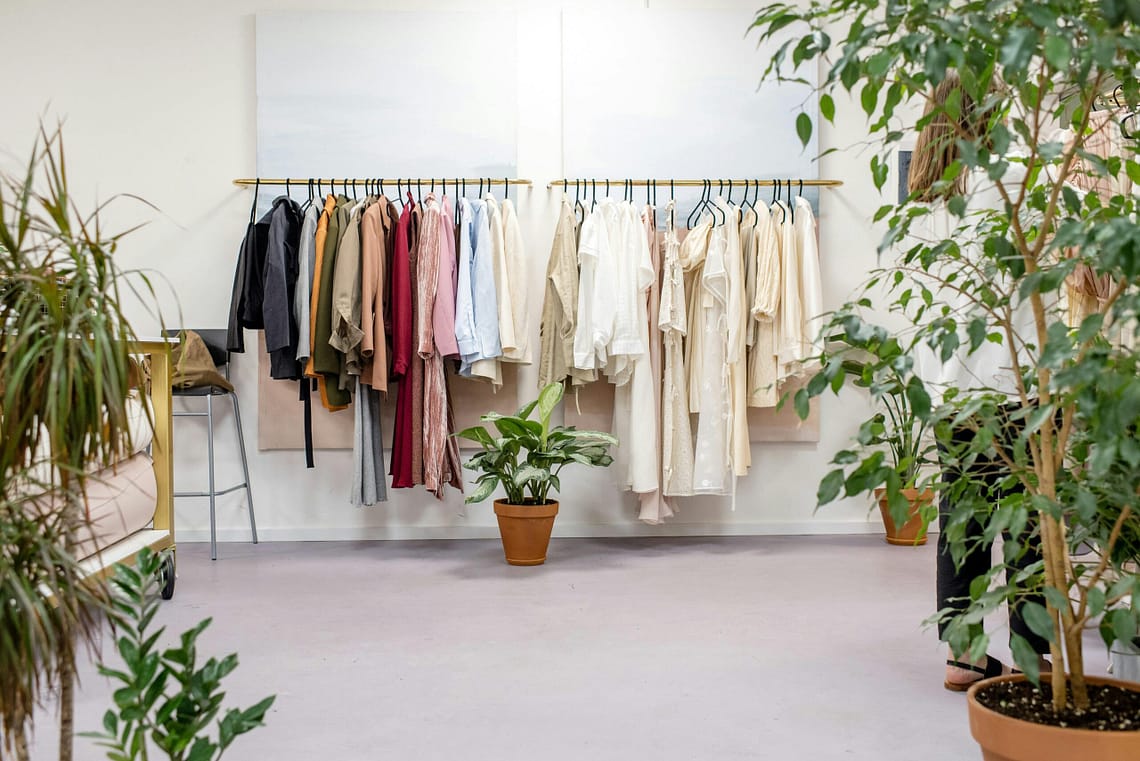
A few years ago, I counted the clothes in my wardrobe and realised I was regularly wearing about a third of them. The rest existed in a kind of holding pattern, too good to donate, not quite right enough to reach for, taking up space and contributing to that daily low-grade frustration of standing in front of a full wardrobe feeling like you have nothing to wear. So, I thought, why not build the ultimate checklist to build a Minimalist Capsule Wardrobe?.
That is the paradox that capsule wardrobe thinking solves. Not by having less, exactly, but by having less of the wrong things.
I am not a minimalist in the purist sense. I do not own thirty items of clothing and feel complete. But I do think deliberately about what earns its place in my wardrobe, and the framework I keep coming back to is capsule thinking: a core of versatile, quality pieces that coordinate with each other, topped up with a few pieces that have actual personality.
The result is a wardrobe where getting dressed takes minutes rather than decisions. Where everything fits, everything works together, and nothing sits unworn for seasons at a time. Where I can look at what I own and feel like it reflects who I actually am, rather than who I was two years ago or who I thought I should be.
This checklist is how to build that. Not a rigid prescription but a practical starting point you can adapt to your actual life, not the life a style guide assumes you have.
Why Capsule Wardrobes Work
The logic is simple. When every piece in your wardrobe coordinates with the others, you multiply your outfit options without multiplying your clothing count. A white button-down works with jeans, trousers, over a dress, or under a blazer. One good piece doing five jobs is worth more than five mediocre pieces doing one job each.
The less obvious benefit is the mental one. Decision fatigue is real, and the wardrobe is one of the first places most people experience it each day. Reducing the number of decisions your wardrobe asks of you in the morning is a small thing that has a disproportionate effect on how the day starts.
There is also a sustainability argument that I find genuinely compelling. Buying fewer, better things is simply less wasteful than the alternative. A well-made blazer worn two hundred times is a better investment than five cheap ones that pill after ten wears each.
The capsule wardrobe is not about austerity. It is about intention. Every piece should earn its place.
Your Complete Minimalist Capsule Wardrobe Checklist
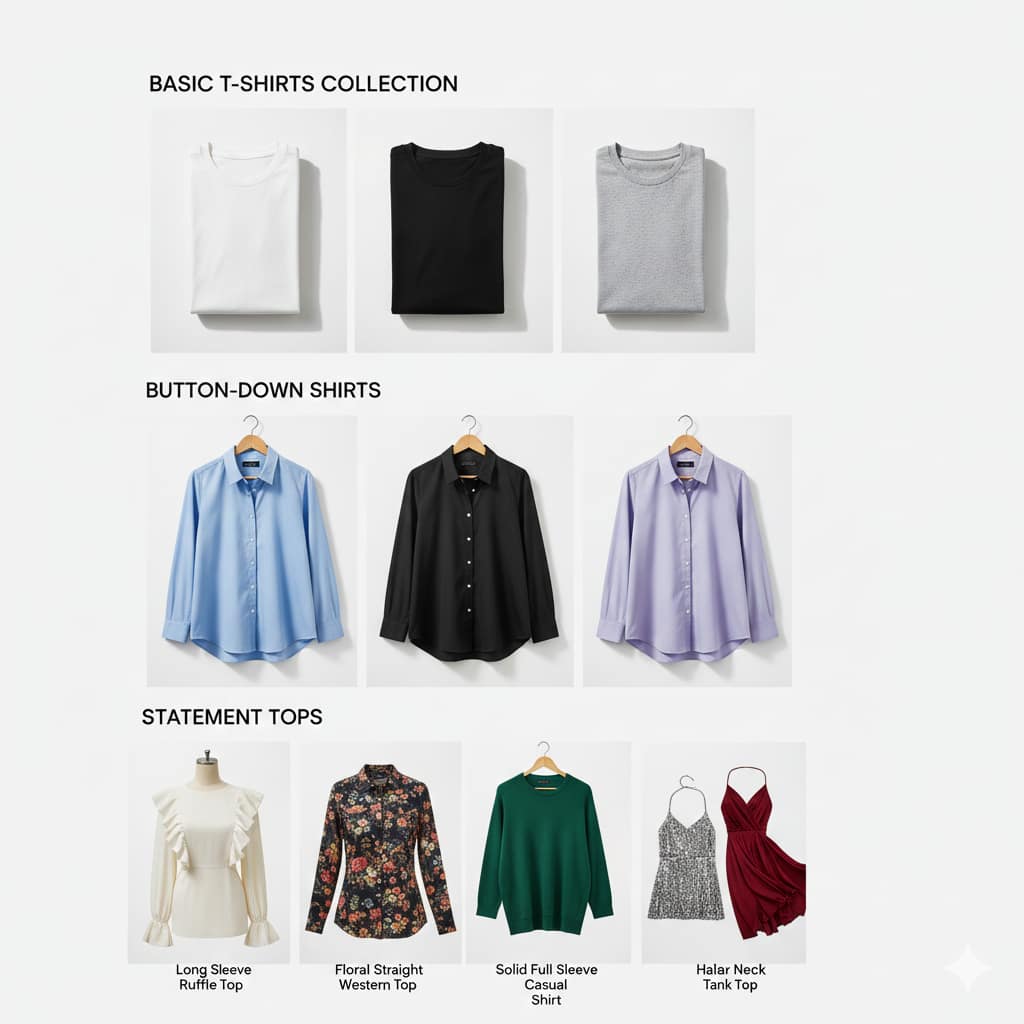
Tops are where most wardrobes go wrong. Too many impulse purchases, not enough genuine workhorses. The capsule approach asks you to think about tops in two groups: foundation pieces that go with everything, and a small number of pieces with actual character.
Foundation pieces do the quiet work. A classic white or cream blouse. A well-fitted black top. A few quality t-shirts in neutrals that you actually like wearing rather than just tolerating. Long-sleeved tops for layering that do not add bulk or look obviously like they are just a base layer.
The statement pieces are where you can be a little less conservative. Two or three tops that reflect something about your actual taste, a print you love, a colour that makes you feel like yourself, a style that is a step above functional. These are the pieces that make a capsule wardrobe feel personal rather than institutional.
Tops (Foundation Pieces)
Start with versatile tops that mix and match effortlessly. These foundation pieces form the backbone of your wardrobe:
- 3 classic blouses in neutral tones – Perfect for work and dressy occasions
- 3 comfortable t-shirts for casual days – Your everyday essentials
- 2 long-sleeved tops for layering – Versatile for transitional weather
- 2 statement party tops for special occasions – Add personality to your wardrobe
Pro tip: Stick to neutral colours like white, black, grey, ivory, cream, and beige for maximum versatility. These shades work seamlessly together and can be dressed up or down depending on the occasion.
Outerwear Essentials
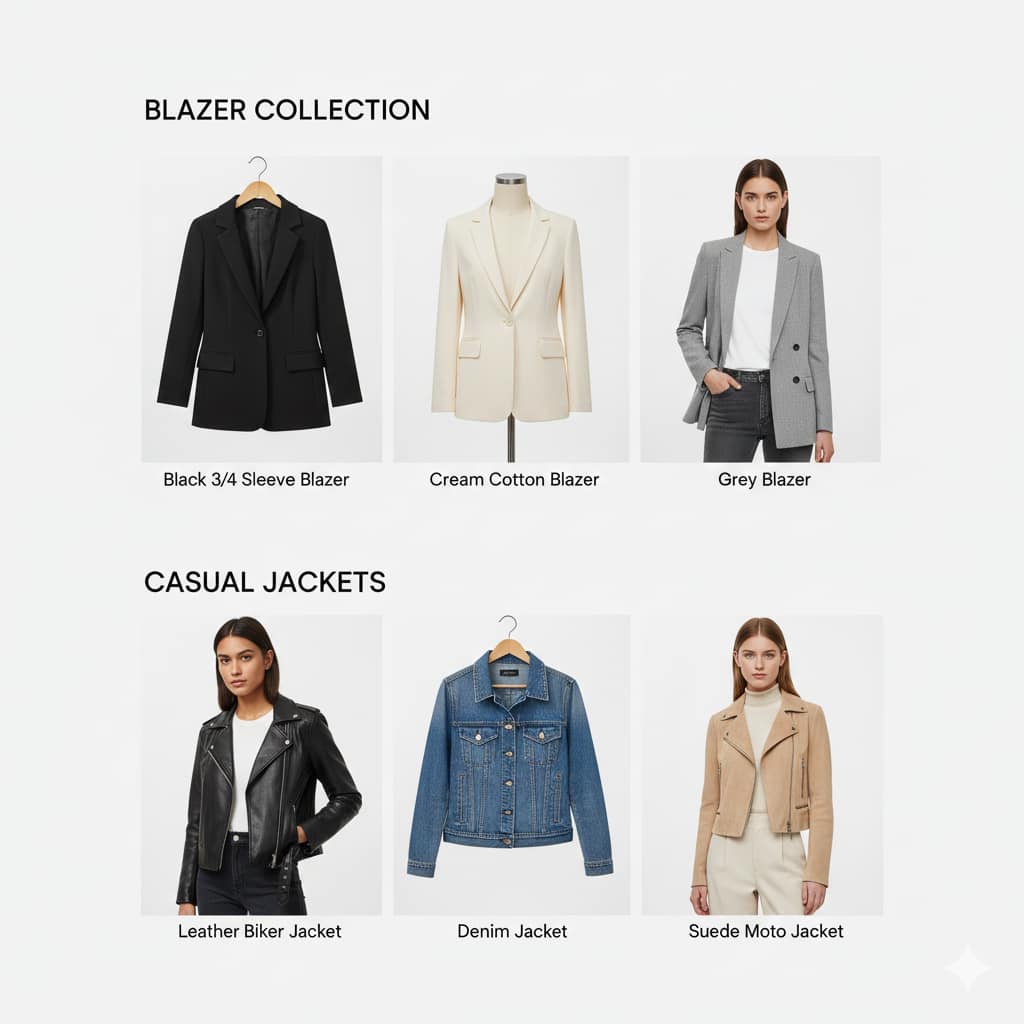
Good outerwear is where quality investment pays off most visibly. A well-made blazer or coat is what people notice. It is also what gets the most wear because it goes over everything else.
The blazer is the single most versatile piece in this category. A neutral blazer in black, cream, or grey works over a t-shirt for a casual smart look, over a dress for meetings, and over loungewear for the school run when you need to look slightly more assembled than you feel. If you own one blazer and it fits well, it will earn its keep many times over.
A trench coat does the same job for outerwear. Timeless, weather-resistant, and the kind of piece that makes anything underneath look more intentional. I have worn mine over jeans, over dresses, and over what was essentially very nice loungewear when I needed to leave the house quickly and feel like a functioning adult.
The denim or leather jacket fills the casual layer gap. Not every outfit needs a blazer, and not every day calls for a coat. A good casual jacket bridges that space.
- Raincoat for practical protection – Functionality meets style
- Neutral blazer for professional looks – A tailored blazer is essential for business settings
- Leather, suede, or denim jacket for casual styling – Add edge to any outfit
- Trench coat for timeless elegance – Classic and weather-resistant
- Woollen cardigan for cosy comfort – Perfect for layering in cooler months
Dresses That Do Double Duty
A capsule wardrobe with well-chosen dresses simplifies getting dressed more than almost any other category. One piece, no coordination required, done.
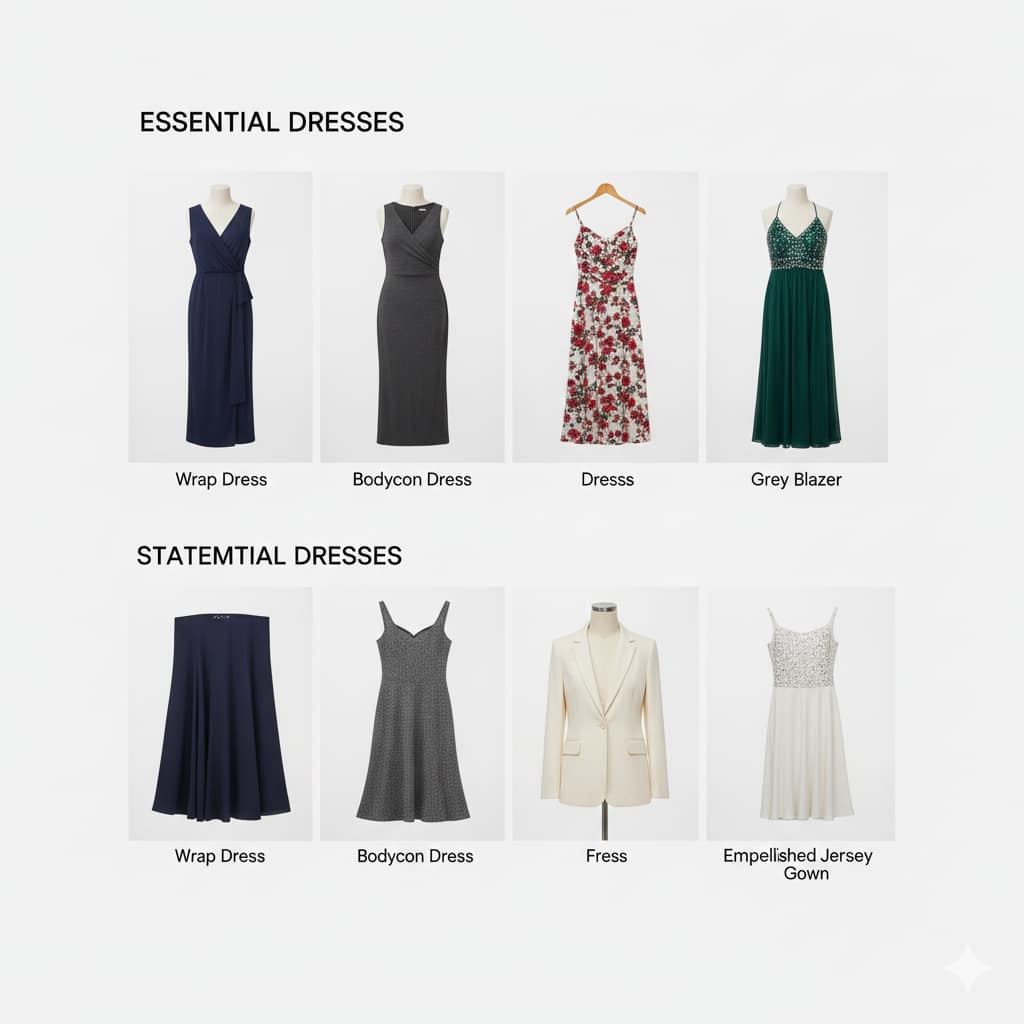
The key is choosing dresses that work across contexts with styling rather than needing a specific occasion. A wrap dress in a neutral tone works for a casual day with sandals, a video call with a blazer thrown over it, and an evening out with heels. That range of use is what justifies its place.
A bodycon dress in a dark neutral serves a different purpose: polished and put-together with minimal effort, it works for events and dinners, and photographs well. One floral or printed dress adds the kind of visual interest that neutrals cannot provide on their own.
The capsule approach to dresses is not about having one for every occasion. It is about having three or four that, between them, can cover every occasion.
- Neutral mini, midi, or maxi dress as your go-to piece – Versatile and timeless
- Floral or patterned dress for variety – Add visual interest to your wardrobe
- Professional/leisure/party dress for special occasions – One dress, multiple styling options
Bottom Line Basics
Bottoms are the foundation that everything else builds on. Get these right, and half your outfit decisions are already made.
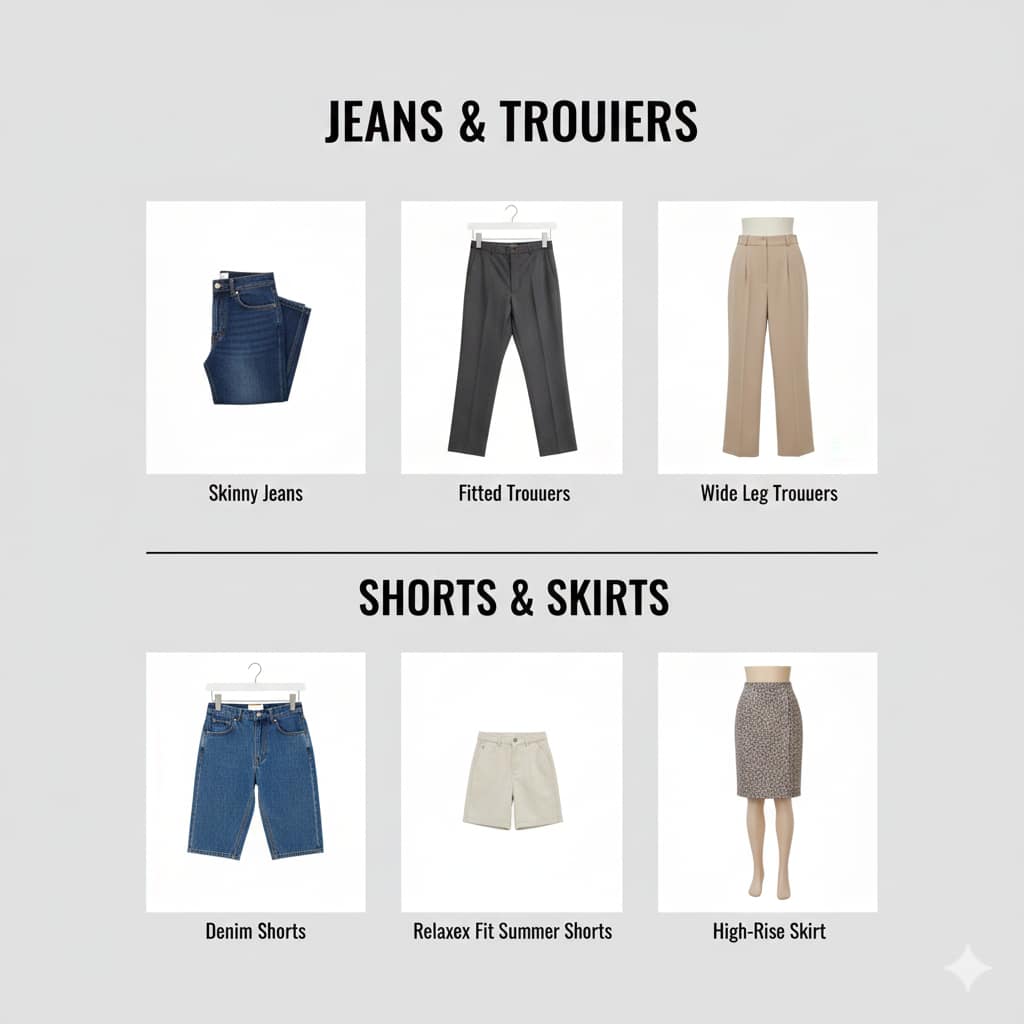
Well-fitted jeans are non-negotiable. Not necessarily skinny, not necessarily wide-leg, but whatever cut flatters your body and that you actually enjoy wearing. Jeans that fit well and feel comfortable are worn constantly. Jeans that are almost right sit in the wardrobe.
Wide-leg trousers have earned their permanent place in the capsule wardrobe conversation because they are genuinely versatile across formal and casual contexts in a way that few other trouser styles manage. A good pair in black, cream, or camel works for video calls, client meetings, and weekend outings with equal ease.
Denim shorts for warm weather, a classic high-waisted skirt for occasions that call for something a little more considered. Neither needs to be elaborate. Both need to be things you actually reach for.
- Well-fitted jeans – Your everyday staple in a flattering cut
- Comfortable shorts – Essential for warm weather
- Versatile trousers – Professional and polished
- Classic skirt – Feminine and versatile
Making It Work For You
This checklist is a starting point, not a rule. The fundamental question is always the same: does this piece earn its place in my actual life, not the life I imagine having?
If you work from home, you need fewer formal pieces and more elevated comfort. If your days are a mix of focused work, school pickups, and the occasional evening out, your capsule needs to cover that range efficiently. If you live somewhere warm, outerwear is a smaller consideration. If you live somewhere with genuine seasons, it matters more.
Build your capsule gradually. Audit what you already own before buying anything. You may find you have most of the foundations already and just need to fill a few specific gaps. Add new pieces only when you can clearly articulate what gap they fill and what else in your wardrobe they will work with.
The capsule wardrobe is not a destination you arrive at. It is a habit of thinking about clothes differently: quality over quantity, versatility over trends, intention over impulse. Once you start making decisions that way, it becomes difficult to make them any other way.
Next Steps: Completing Your Capsule
This comprehensive guide covers your clothing essentials, but your capsule wardrobe journey doesn’t end here. To complete your minimalist wardrobe transformation, you’ll also need to consider:
- Athleisure – For workouts and active days
- Pyjamas – Quality sleepwear for comfort
- Shoes – Versatile footwear options
- Bags – Functional accessories
Look out for our next post, where we’ll dive into these essential categories, helping you round out your capsule wardrobe with the perfect finishing touches.
Start Your Minimalist Journey Today
The beauty of a capsule wardrobe is that it asks you to be honest about your actual life. Not the aspirational version, the real one. What you wear most days. What genuinely makes you feel like yourself? What sits untouched because it was never quite right.
Start with one category. Clear out what does not belong. Identify one or two genuine gaps. Fill them thoughtfully.
That is the whole process. It is slower than a wardrobe overhaul and more permanent than a seasonal clear-out. Done properly, you end up with a wardrobe you genuinely use, genuinely love, and genuinely never have to think too hard about.
Which is, in the end, the entire point.


You May Also Like

10 Tips to Thrift Shop Like a Pro
A Journey into the World’s Most Beloved Traditions
