Embracing Slow Living: Your Guide to Finding Joy in Life’s Simple Moments
I did not arrive at slow living through a book, a podcast, or a particularly compelling Instagram account. I arrived at it through exhaustion.
Not the dramatic kind. The quiet, accumulated kind that builds up over months of moving too fast through days that were full but not particularly satisfying. Doing a lot, finishing things, checking boxes, and still ending the week with a vague feeling that I had been busy rather than present. That I had moved through my life efficiently without actually inhabiting much of it.
The shift did not happen all at once. It happened in small recognitions. The best parts of my days were consistently the unhurried ones. That rushing through a meal to get to the next thing was a worse use of time than eating slowly and tasting it. That the version of productivity I had been chasing was costing me something I could not quite name, but I could definitely feel the absence of.
Slow living was not a trend I adopted. It was a correction I made. And the longer I live this way, the less I can imagine going back.
What Is Slow Living? (And Why Your Soul is Craving It)
The phrase slow living has accumulated a lot of aesthetic baggage. Linen tablecloths, sourdough starter, and carefully curated bookshelves. If that is your version of it, wonderful. But the aesthetic is not the point, and it is not the requirement.
Slow living is simply the practice of being deliberate about how you spend your time and attention. Choosing presence over automatic busyness. Doing fewer things with more care rather than more things with less of it. Measuring a good day by how it felt rather than exclusively by how much it produced.
It is the opposite of hustle culture, which tells you that your worth is proportional to your output and your rest is something you earn rather than something you need. Hustle culture is very good at making you feel busy. It is not particularly good at making you feel well.
Slow living asks a different question. Not “how much did I get done today” but “how did I actually live today.” That is a harder question to answer well. It is also a more interesting one.
The Myth That Slowing Down is a Luxury
The most common objection to slow living is that it is something only certain people can afford. People without demanding jobs, without young children, without financial pressure, without the particular constraints of a life that does not have much slack in it.
There is something true in this. Structural constraints are real, and not everyone has equal access to unhurried time. I do not want to be dismissive of that.
But presence is not a luxury. Gratitude is not a luxury. Paying attention to the moment you are in rather than the seventeen you are mentally already in costs nothing and is available regardless of circumstance. The practices of slow living that matter most, single-tasking, being present in conversation, and noticing the small good things, are accessible in almost any life. They just require choosing them consistently, which is easier in some lives than others, but possible in most.
The version of slow living that requires a farmhouse and unlimited free time is an aesthetic. The version that is actually worth pursuing is a way of paying attention. Those are different things, and the second one travels with you.
But I don’t have time to slow down!” – I hear you, and I used to say the same thing.
What Slow Living Is Not
It is not laziness. Doing things slowly and deliberately is not the same as doing less. It is often doing the same amount with more care and more enjoyment.
It is not perfection. Some days are rushed. Some weeks pull you back into patterns you thought you had changed. This is not failure. It is just how sustained change actually works, not a straight line but a general direction maintained imperfectly over time.
It is not an endpoint. There is no moment when you have fully arrived at slow living and can stop being intentional about it. It is an ongoing practice of choosing presence over automatic busyness, which means it requires choosing again tomorrow and the day after.
The Quiet Argument for Slowing Down
Here is what I know after several years of living this way: the parts of my life I am most grateful for are almost entirely the unhurried ones. The slow mornings. The long conversations. The afternoons without an agenda. In the ordinary moments, I was present enough to actually notice.
None of these required extraordinary circumstances. They just required slowing down enough to be in them rather than moving through them on the way to something else.
That is the whole argument for slow living, really. Not that it will transform your productivity or optimise your wellbeing or make your mornings look like something worth posting. Just that the life you already have, the ordinary Tuesday of it, the unremarkable Wednesday of it, is worth being present for. And that presence, reliable and consistent, is what slow living is ultimately trying to build.
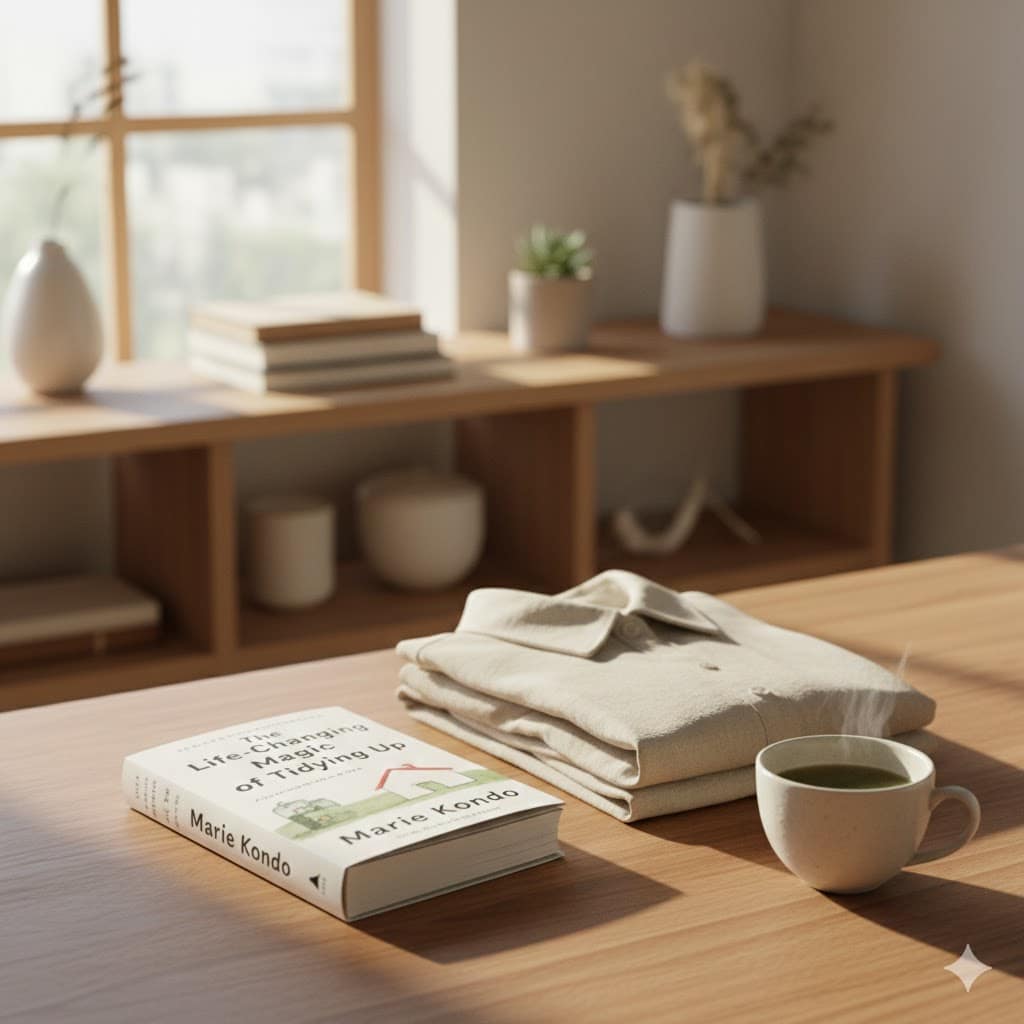
Recommended reading: The Life-Changing Magic of Tidying Up by Marie Kondo – This book literally changed how I view my possessions.
Your Slow Living Starter Kit: 7 Game-Changing Practices
1. Create a Soul-Nourishing Morning Routine
Forget the 5 AM grind mentality. Your morning routine should feel like a warm hug, not boot camp.
My current routine:
- 10 minutes of gentle stretching
- Journaling with my favourite pen (Pilot G2 Premium Gel Pens – trust me on this)
- Coffee without distractions
Pro tip: Start with just 15 minutes. Consistency beats intensity every single time.
2. Transform Your Kitchen into a Sanctuary
Cooking used to stress me out until I discovered the magic of mindful cooking. Now? It’s my meditation practice.
Game-changing tools:
- Bamboo cutting board (the tactile experience matters)
- Cast iron skillet (for that slow-food satisfaction)
- Essential oils diffuser (lavender while you cook = instant zen)
3. Embrace the Art of the Digital Detox
Your phone isn’t evil, but your relationship with it might be toxic.
My digital boundaries:
- Phone-free mornings until 9 AM
- No screens during meals
- Sunday afternoon tech sabbath
Helpful tools:
- Physical alarm clock (so your phone can sleep outside your bedroom)
- Good old-fashioned books instead of e-readers before bed
4. Cultivate Hobbies That Feed Your Soul
When’s the last time you did something just because it felt good? Not for Instagram, not for productivity, just for pure joy?
Soul-feeding hobby ideas:
- Gardening: Herb growing kit for beginners
- Reading: Create a cosy reading nook with soft throw blankets
- Journaling: Beautiful leather journal that makes you want to write
- Knitting: Beginner knitting kit for meditative crafting
5. Master the Art of Saying No
Here’s a revolutionary thought: You don’t have to do everything. Every yes to something you don’t truly want is a no to something you do.
My No framework:
- Does this align with my values?
- Will I regret missing this in five years?
- Am I saying yes out of guilt or genuine excitement?
6. Create Rituals Around Transitions
The space between activities is where magic happens.
Transition rituals I swear by:
- Three deep breaths before starting something new
- Peppermint tea is my signal that my work is done
- Five minutes of gratitude before bed
7. Embrace the Power of Micro-Moments
Slow living isn’t about having hours of free time (because, reality). It’s about finding magic in the margins.
Micro-moment examples:
- Savouring your first sip of morning coffee
- Feeling the sun on your face during a walk
- Really listening when someone talks to you
Common Slow Living Myths (Busted!)
Myth 1: Slow living means being lazy. Reality: It means being intentional about your energy
Myth 2: I can’t afford to slow down. Reality: You can’t afford NOT to (burnout is expensive)
Myth 3: Slow living is only for privileged people. Reality: Presence and gratitude cost nothing
Your Next Steps: The Slow Living Challenge
Ready to dip your toes in? Here’s your 7-day challenge:
- Day 1: Create a 10-minute morning routine
- Day 2: Eat one meal without distractions
- Day 3: Take a tech-free walk
- Day 4: Declutter one small space
- Day 5: Practice the 5-4-3-2-1 grounding technique
- Day 6: Try a new mindful hobby for 30 minutes
- Day 7: Reflect and journal about your experience
The Truth About Slow Living (From Someone Who’s Living It)
Here’s what nobody tells you: Slow living isn’t about perfection.
Some days, I still check my phone too much. Sometimes I rush through dinner. Occasionally, I fall back into old patterns. And that’s okay.
This journey isn’t about becoming a zen master overnight. It’s about creating small pockets of peace in your everyday life. It’s about choosing presence over productivity, depth over speed, and joy over achievement. Your future self, the one who can actually enjoy life instead of just surviving it, is waiting for you to make that choice.
Resources to Deepen Your Slow Living Journey
Books that changed my perspective:
- The Gifts of Imperfection by Brené Brown
- Atomic Habits by James Clear (for building sustainable slow living practices)
- The Art of Not Being Governed by Everyday Distractions (Medium article)
Helpful apps:
- Headspace (for meditation)
- Forest (for digital detox)
- Insight Timer (free guided meditations)
Websites worth bookmarking:
- Becoming Minimalist (for simplicity inspiration)
- Zen Habits (for mindful living tips)
Remember: This isn’t about adding more to your plate. It’s about savouring what’s already there.
Your slower, more intentional life is waiting. Are you ready to meet it? What’s one small way you’re going to slow down this week? Drop a comment below – I’d love to hear about your slow living journey!
Pin this post for later, and don’t forget to share it with someone who needs permission to slow down. 💚


You May Also Like
Simple Daily Habits for a Healthier Lifestyle: Your Complete Guide to Wellness

Summer Body Goals: Keeping It Real With Yourself