Summer Body Goals: Keeping It Real With Yourself
Let me tell you about the summer I decided I was going to be a completely different person by June.
It was one of those springs where everything conspired to make you feel like your current self was somehow not enough for the season ahead. Every second piece of content I came across was a countdown. Twelve weeks to summer. Eight weeks to summer. Five moves for a flat stomach. The algorithm had decided I needed fixing, and it was very committed to letting me know.
So I committed. I overhauled my eating. I started workouts that I did not enjoy at times that did not suit me. I tracked things. I restricted things. I pushed through tiredness because the plan said to push through tiredness.
By the time summer actually arrived, I was exhausted, slightly miserable, and had spent three months making myself feel worse in pursuit of feeling better. The beach was lovely. I was too tired to fully enjoy it.
That was the last time I approached summer that way.

The Problem With “Summer Body” Culture
The premise of the summer body concept is that your body requires preparation before it is acceptable to exist in warm weather. That you owe it to yourself, or to other people, or to some unspoken social contract, to look a certain way before you are permitted to wear less clothing and spend time outdoors.
It is worth saying plainly that the premise is nonsense.
Your body is not a project. Summer is not a performance review. The goal of the warm months should be to actually experience them, to feel good moving through them, to have the energy to do the things you want to do, not to look a particular way while doing them.
This is not a radical idea. It is just the obvious one that gets buried under several billion dollars’ worth of diet culture marketing every spring.
What I Focus on Instead
When I stopped chasing a summer body and started thinking about summer energy, everything shifted.
The question I ask myself now is not “how do I want to look in July?” It is “what do I want to be able to do in July, and how do I feel right now compared to how I want to feel?”
Those are different questions, and they lead to completely different behaviours.
Wanting to look a certain way leads to restriction, punishment, and outcomes measured only in mirrors and scales. Wanting to feel a certain way leads to hydration, movement you actually enjoy, food that genuinely fuels you, and sleep that you prioritise rather than sacrifice. The byproduct of those things is a body that looks and feels healthy. The difference is that the process is not miserable.
Hydration is not boring; it is actually everything
I know. You have heard this one before. Drink more water. Revolutionary advice.
Here is what changed my mind about taking it seriously: I paid attention to the correlation between how much water I drank on a given day and how I felt by 3pm. The difference on well-hydrated days versus underdone ones was not subtle. Energy levels, mental clarity, the quality of my skin, and whether I had a low-level headache by afternoon. All of it tracked directly to how well I had hydrated through the morning.
In summer, this compounds because heat increases how much you lose through perspiration without always increasing how thirsty you feel. You can be meaningfully dehydrated before your body registers it as thirst.
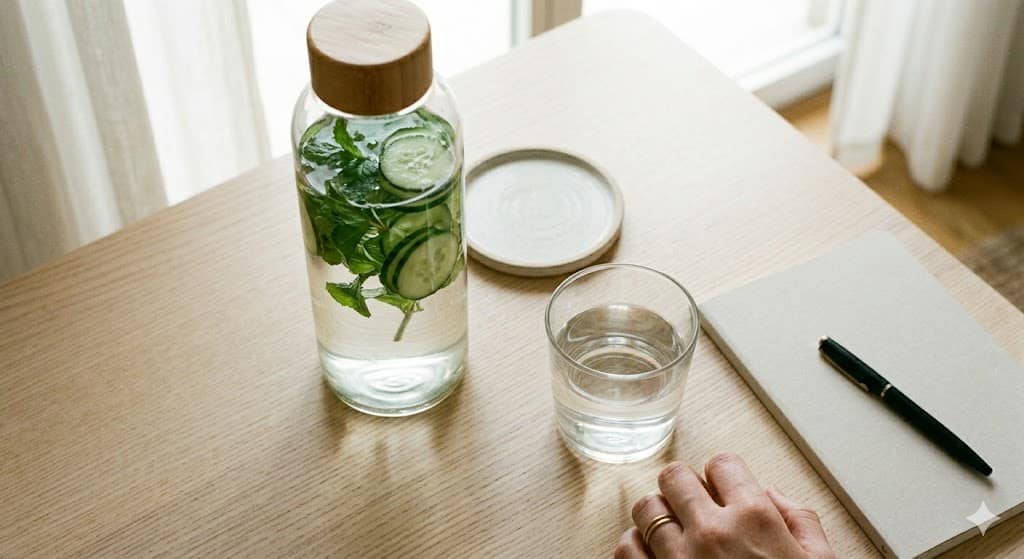
The habit that actually worked for me was structural rather than motivational. A large water bottle is on my desk where I can see it. A glass first thing in the morning before coffee. Infused water, when plain water feels like a commitment, cucumber and mint, lemon and ginger, anything that makes it taste like something. These are not hacks. They are just small decisions that make the right thing easier to do consistently.
Movement That Feels Like Living
At some point, the fitness industry convinced a significant portion of women that exercise only counted if it was hard enough to be unpleasant. That the measure of a workout’s validity was suffering. That if you enjoyed it, it probably was not rigorous enough to matter.
This is both incorrect and counterproductive. The best movement practice is the one you will actually sustain, which, almost by definition, needs to be something you do not dread.
I had a period of trying workouts I found genuinely miserable because the results were supposed to be worth it. They were not, partly because I could not sustain them long enough for results to accumulate, and partly because spending several hours a week doing something you actively dislike has a cost that goes beyond the physical.
What I have now instead is movement I look forward to, or at least feel neutral about. Walking is the one that has stuck longest and delivered most consistently, both for physical wellbeing and for the mental clarity that comes from being outside and moving at a pace that allows actual thinking. It requires no equipment, no class booking, and no particular motivation beyond putting on shoes.
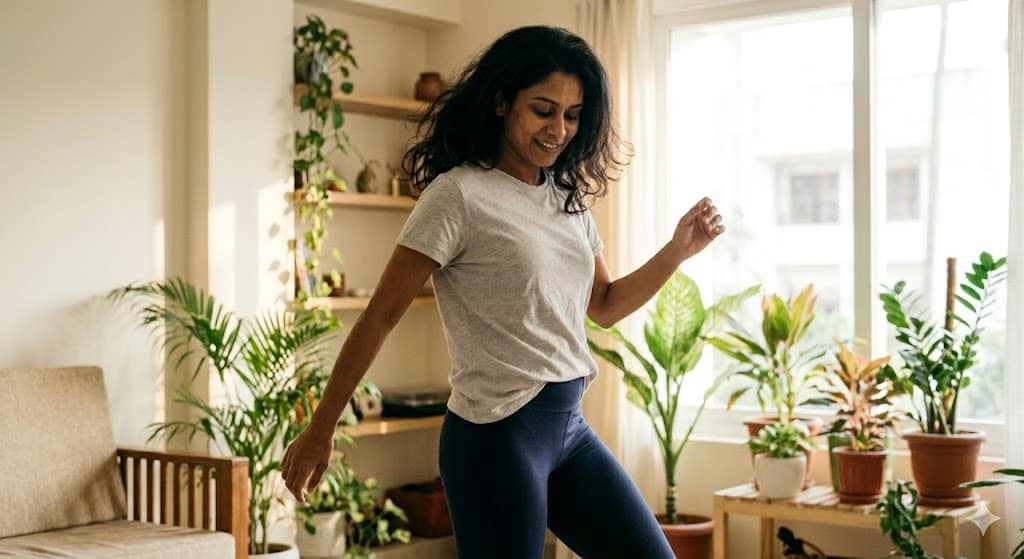
Beyond walking: anything that gets you moving in a way that feels like living rather than like punishment counts. Dancing, swimming, cycling somewhere with an actual destination, a yoga class you go to because you leave feeling better rather than because it burns a certain number of calories. The form matters less than the consistency, and the consistency is most achievable when the activity itself is not something you have to force yourself through.
Eating for Summer Energy, Not for a Number
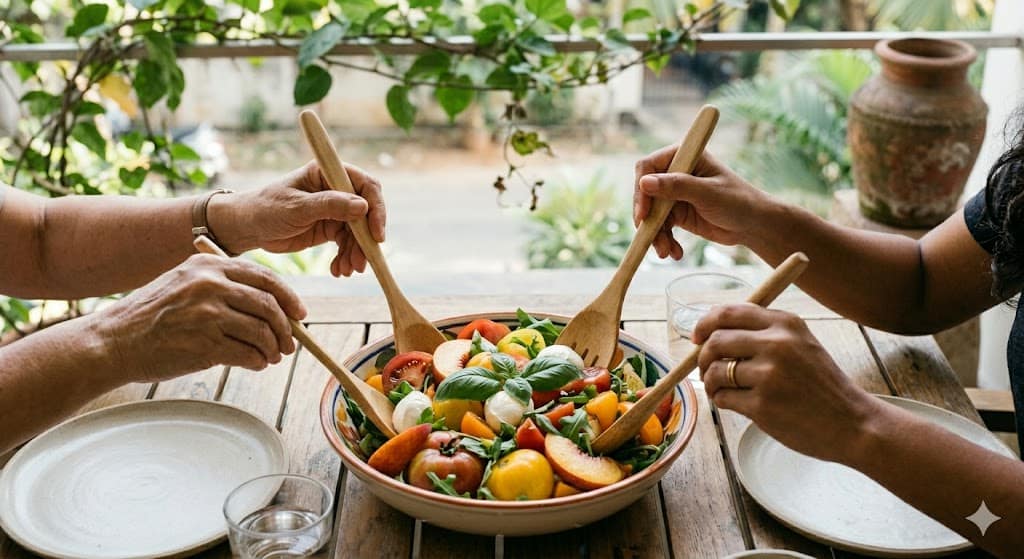
Summer produce is genuinely one of the better arguments for seasonal eating. The berries, the tomatoes, the stone fruits, the fresh herbs, the vegetables that taste completely different when they are actually in season rather than shipped from the other side of the world in February. Eating well in summer does not require discipline as much as it requires paying attention to what is actually good right now.
The framework I find most useful is addition rather than subtraction. Not “what do I need to cut out” but “what can I add that will make me feel better.” More water-rich fruits and vegetables are beneficial because they genuinely help with hydration and energy in the heat. More protein because it affects how full and focused I feel throughout a working day. More meals cooked at home, where I know what is in them, not from restriction but from preference.
The summer diet cycle, cutting things out in May and June and then abandoning the whole effort by August, produces nothing except a complicated relationship with food and a reliable annual disappointment. Eating in a way you can sustain year-round, with slightly more attention to seasonal produce when the season calls for it, produces actual long-term change without the collateral damage.
Sleep in Summer, the Habit Most People Sacrifice
Warmer nights, longer days, later sunsets. Summer has a way of quietly eroding sleep without it feeling like a loss until the fatigue accumulates enough to become undeniable.
Good sleep in summer requires a little more active management than in other seasons. Blackout curtains or a sleep mask for the earlier morning light. A cooler room, where possible, a fan if not. A consistent bedtime that does not drift later and later as the evenings stay light.
The connection between sleep quality and how you feel in your body is direct and significant. Poor sleep affects appetite regulation, energy levels, mood, and the body’s ability to recover from physical activity. No amount of good eating or consistent movement fully compensates for a chronic sleep deficit. It is the foundation that everything else sits on.
What Summer Is Actually For

Summer is for the things you look forward to all year. Long evenings outdoors. Weekend plans that feel expansive rather than hurried. The particular quality of light in July that makes ordinary things look better than they do in February.
None of that requires a specific body. All of it requires enough energy, enough physical being, and enough self-acceptance with yourself to actually be present for it rather than spending it monitoring how you look in it.
The realistic summer goal is not a number or a size or a comparison to last year or to someone else. It is to feel well enough in your body to do the things you want to do, and calm enough in your relationship with it to enjoy them while you are doing them.
That is achievable. It does not require a twelve-week plan. It requires a few consistent habits and the decision to stop waiting until you look a certain way to start living the summer you actually want.


One Comment
Pingback: